Introduction
Athens is the exhilarating and exciting well-known capital city of Greece. It is homeland of several other Greek Gods and Goddesses. There are several historical landmarks and buildings to see. Not to mention restaurants with great Greek food! Athens was a place of great culture. Famous philosophers were brought up there, such as Socrates, Plato and Aristotle.
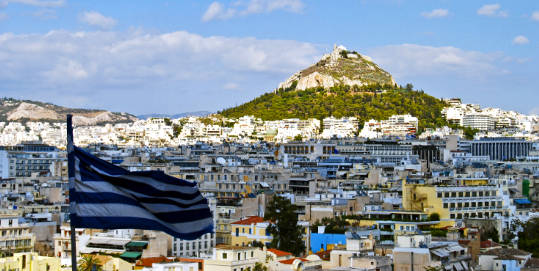
Then: At the time, Athens became the capital of the newly founded Greek nation and was a town of only 12 000. It soon grew to a larger city of 453 000 by 1920. After WWII, Athens was inhabited by almost 2 000 000 people. According to Greek legend, Athens got their name from the Greek Goddess of Wisdom, Athena. Athena and Poseidon each made a new invention to present to the citizens of what was later named Athens. Poseidon made a water fountain, and Athena made the olive tree. They saw that Athena's gift was better, so named their town after her. The very first Olympic games were also held here.
Now: Birthplace of democracy and drama, Athens is now a modern metropolis. It is a very busy city crammed with 3 million loud people, including hundreds of thousands of tourists from all over the world. Athens has made significant changes for the last few centuries. One of the biggest is the amount of pollution. A few centuries ago, Athens was considered the ugliest and dirtiest place you could visit in Europe, due to the air quality. But that has changed a great deal since, and is now much more pleasurable to visit.
Location
Athens is located in the south-eastern part of Europe and is near the bottom of its country, Greece. Athens is on a peninsula stretching south-east into the Aegean Sea. The latitude and longitude of Athens is 37.9667° N, 23.7167° E.

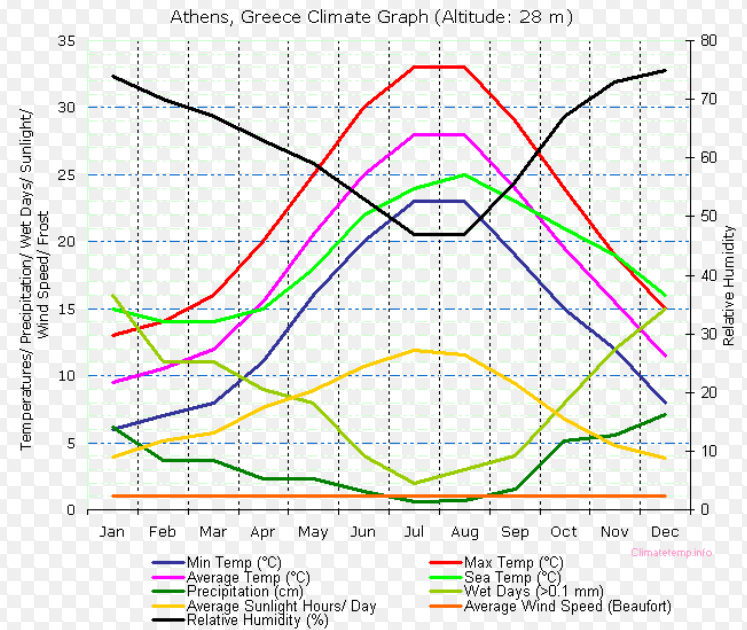
What Is The Difference Between Climate And Weather?
When we talk about climate, it is how the weather is like over a long period of time, so it is basically what we will expect there. Until for the next few years or so, if the average weather goes up a couple of degrees then that will probably be the new climate. On the other hand, weather is what it is like over a short period of time. For example, a couple of days in Australia is 35 degrees celsius when it is way above the summer average. If it then goes back to normal soon, then that wasn't climate, it was just extremely hot for a while.